How to run a story point estimation meeting
A practical agenda for story point estimation meetings: prep, private votes, reveal, and when to split work—built for scrum teams online.
Goal of the meeting
A story point estimation meeting exists to agree relative effort on ready work—not to redesign the product or re-litigate strategy.
Success looks like: a shared scale, clear topics, private votes, short discussions, and numbers your tracker can trust.
Before anyone joins
Select only ready stories. Drop anything missing acceptance criteria or a clear owner question.
Choose one deck for the session. Share the room link early so people are not hunting for invites while the first hand starts.
Decide who facilitates. Scrum masters and BAs often run the table without voting so they do not anchor the room.
Suggested agenda
0–5 min: confirm deck, roles, and definition of ready.
Then repeat per story: read topic → silent vote → reveal → discuss outliers → agree or split → log points.
Last 5 min: note follow-ups, spikes, and stories deferred for refinement.
Rules that keep meetings short
One hand, one topic. No drive-by scope adds mid-vote.
One revote after discussion is enough. If you still cannot agree, split the story or schedule discovery.
Time-box debates. Wide spreads are information—not a failure.
Online setup that works
Use free online planning poker in the browser so hybrid teammates share the same cards. Paste ticket IDs into a topic field. Keep cameras optional; keep the reveal mandatory.
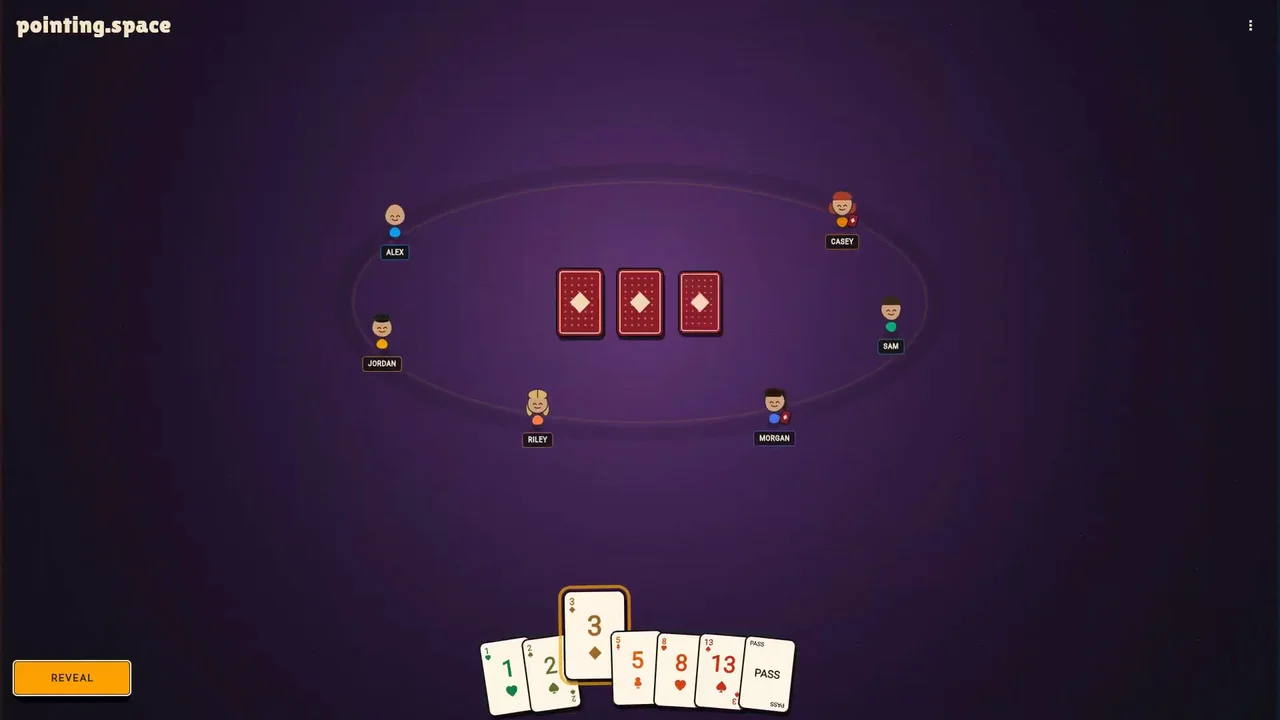
Pointing Space is built for this agenda: create a room, share the link, vote privately, reveal, next hand—no install and no account required to start.
New to the practice? Read what is planning poker. Facilitating? Read clean estimation tips. Choosing a scale? Compare Fibonacci and T-shirt sizes.
FAQ
How long should a story point estimation meeting be?
Long enough for the ready backlog slice—often 30–60 minutes. Marathon sessions usually mean the backlog was not refined.
Who should attend?
People who will do the work should vote. Facilitators and product partners clarify scope. Extra spectators are optional and should not dominate discussion.
What if we cannot agree on points?
Capture the assumptions that differ, split the story, or create a spike. Forcing a fake consensus helps nobody in sprint planning.
Related articles
Want to try it live? Create a free planning poker room on Pointing Space.