Fibonacci vs T-shirt sizes for story points
When to use Fibonacci planning poker vs T-shirt sizes—practical deck advice for teams that estimate effort without overthinking the scale.
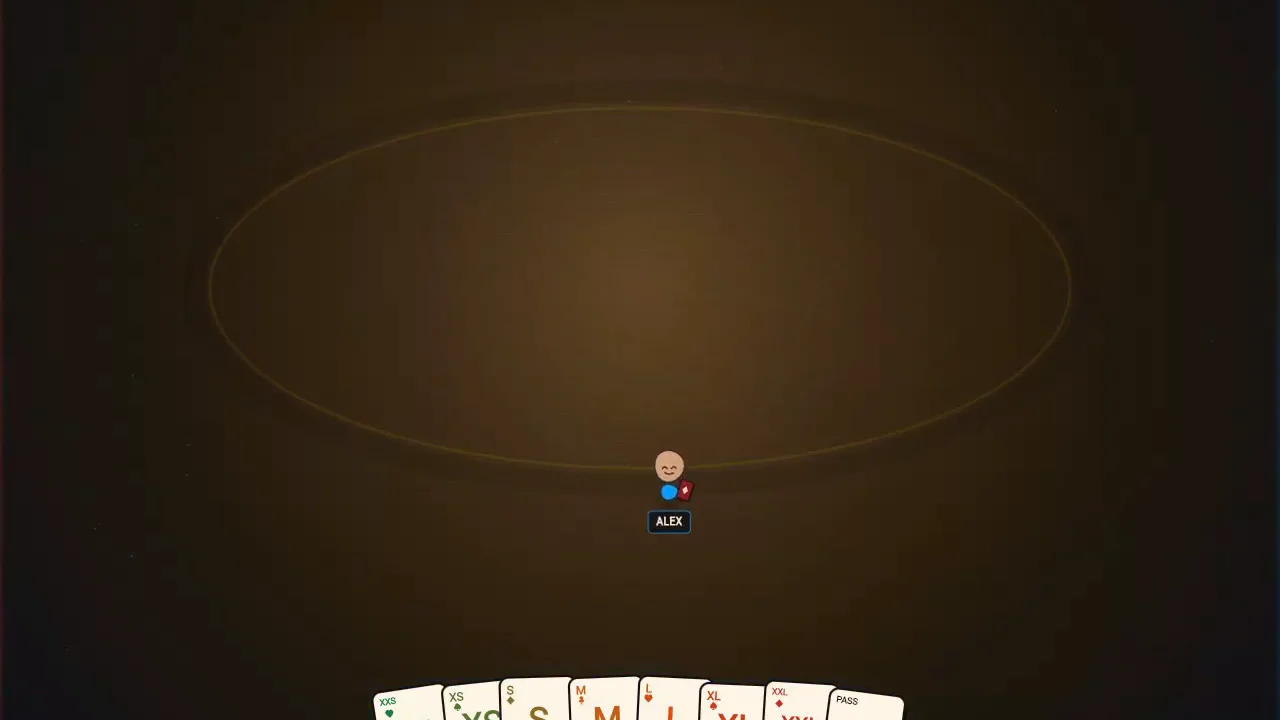
Pick a deck and stick with it for a while
Teams fight about scales more than they fight about the work. Pick one deck and stick with it long enough to build shared calibration.
In Pointing Space you can switch decks when the session needs it. My rule for managers: one scale per meeting, write the topic on the hand, and stop re-litigating the deck mid-vote.
When Fibonacci wins
Fibonacci (1, 2, 3, 5, 8…) is what most engineering teams expect. The gaps push people toward relative effort instead of fake precision like “6.5 points”.
Use it for product backlogs where you care about sprint capacity, velocity trends, and comparing implementation risk across stories. It pairs well with private votes and a single revote after discussion.
When T-shirt sizes are friendlier
T-shirt sizes (S, M, L…) work when the room mixes engineers with stakeholders who do not live in story points. They are useful for early roadmap shaping and rough sizing—not for precise sprint capacity math.
Translate shirts to points later only if the team agrees on a mapping. Forcing a conversion mid-meeting usually restarts the scale fight.
Working days and other decks
Working-day decks help when the question is calendar effort for a small team that already thinks in days. They are honest about time and easy to misuse as commitments.
Whatever you choose, the deck is a conversation tool. Wide spreads still mean “talk about assumptions,” not “average the cards and move on.”
A practical default
Default to Fibonacci for engineering sprint work. Use T-shirts for mixed-audience roadmap sessions. Keep working days for short, explicit time boxes.
Then spend your energy on ready stories and clean facilitation. If you need the session playbook, read how scrum masters run clean estimation. If you need the practice definition, start with what is planning poker.
FAQ
Can we switch from T-shirts to Fibonacci later?
Yes. Many teams size roughly with shirts early, then re-estimate ready sprint work in Fibonacci. Avoid mixing both scales in the same hand.
Why does Fibonacci skip numbers like 4 or 6?
The growing gaps discourage false precision. Choosing 5 vs 8 is meant to be a meaningful difference in effort or uncertainty—not a half-point negotiation.
Which deck does Pointing Space support?
You can switch between Fibonacci, T-shirt sizes, and working days so the scale matches how your team thinks about effort.
Related guides
Want to try it live? Create a free planning poker room on Pointing Space.