What is planning poker? A practical take for scrum teams
Planning poker explained for managers, scrum masters, and BAs—why private votes and a shared reveal still beat arguing in a meeting.
Planning poker in one sentence
If you run sprints, you have already been in the meeting where one engineer says “two points”, another says “eight”, and half the room is still reading the ticket.
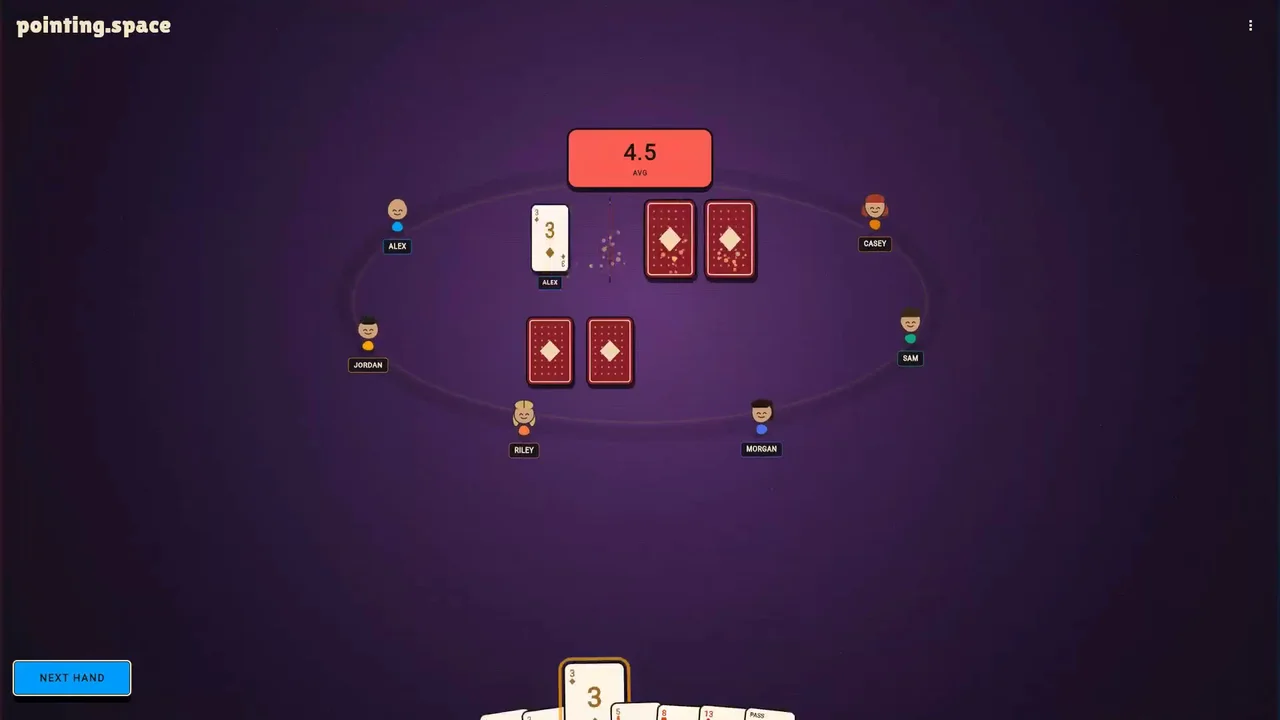
Planning poker (also called scrum poker or pointing poker) is the simple fix: everyone picks a card in private, then you reveal together. The number is not magic—the conversation after the reveal is.
Why private votes matter
Open discussion first almost always anchors the room. The loudest voice, the senior engineer, or the person who “owns” the ticket sets a number before anyone else has finished thinking.
Private votes reverse that. You get a spread of independent estimates, then you talk about the outliers. That is where assumptions surface: missing acceptance criteria, hidden dependencies, or a story that is really two stories.
Managers, scrum masters, and business analysts get a cleaner signal. Developers keep their cards honest. The facilitator’s job is pace and clarity—not casting the vote that everyone copies.
A simple session flow
You do not need a heavy process deck. You need a shared scale, a quiet vote, and space to talk when the spread is wide.
1. Pick one deck for the meeting (Fibonacci is the default for most engineering teams).
2. Put the story title or ticket ID on the hand so everyone estimates the same thing.
3. Vote privately, reveal together, discuss only the wide gaps.
4. Agree a number or split the work, then move to the next hand.
That flow is exactly what free online planning poker tools should optimize for—less ceremony, more throughput.
Who planning poker is for
Engineering teams use it for sprint capacity and backlog refinement. Product and BA partners use it to pressure-test scope before a commitment. Facilitators use it to stop estimation meetings from turning into debate tournaments.
Remote and hybrid teams benefit most: a shared browser room keeps everyone on the same hand without sticky notes, screen-share chaos, or another SaaS seat.
Try it without friction
I built Pointing Space because I wanted that flow without ads, account walls, or tools blocked by corporate VPNs. Open a room, paste the story, vote, reveal, move on.
If you want the facilitator angle next, read how scrum masters run a clean estimation session. If you are still picking a scale, compare Fibonacci vs T-shirt sizes.
FAQ
Is planning poker the same as scrum poker?
Yes. Planning poker, scrum poker, and pointing poker usually mean the same practice: private card votes on relative effort, then a shared reveal and discussion.
Do story points equal hours?
No. Story points are relative effort and uncertainty—not a timesheet. Teams that map points strictly to hours often re-create the same arguments planning poker was meant to avoid.
How long should a planning poker hand take?
Most healthy hands take a few minutes: read, vote, reveal, short talk if needed. If every story turns into a long debate, the ticket is not ready or the room is estimating the wrong thing.
Related guides
Want to try it live? Create a free planning poker room on Pointing Space.