How scrum masters run a clean estimation session
Facilitator tips for scrum masters and BAs: keep the room moving, use private votes, and stop the loudest voice from setting every story point.
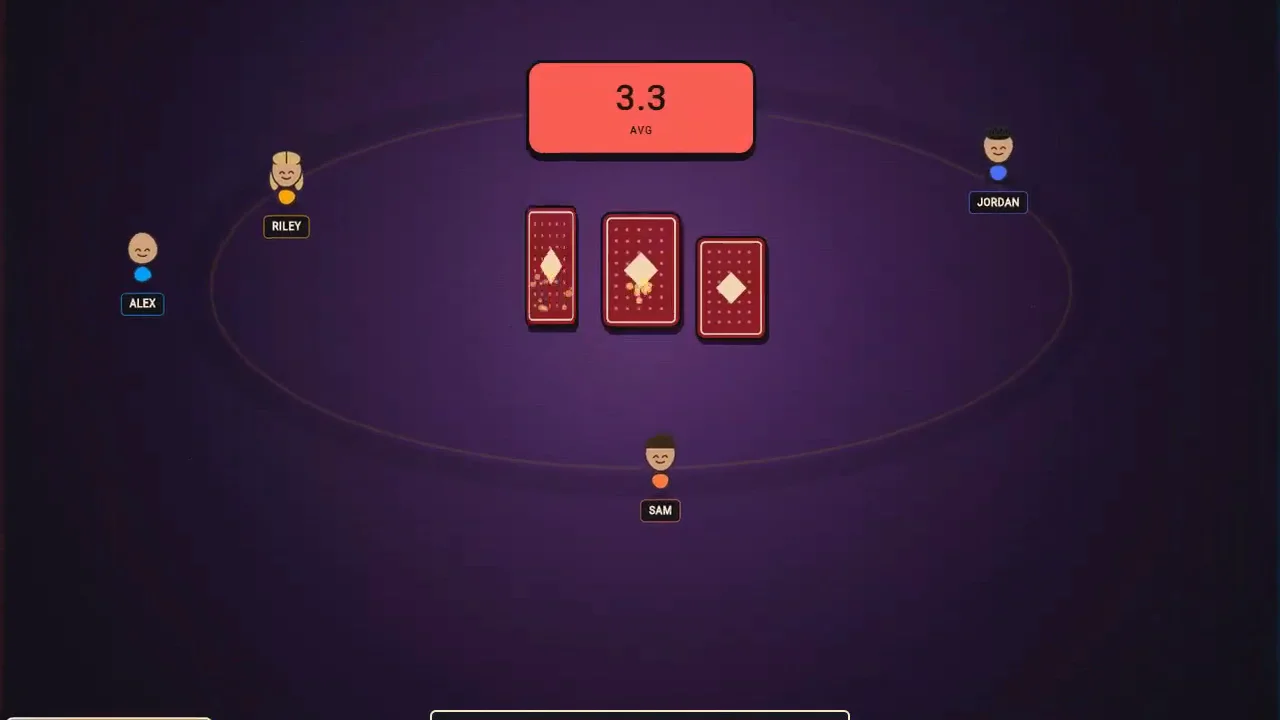
Quiet work, short discussion
A good estimation session is quiet work with a short discussion—not a debate tournament.
When I facilitate, I treat the board like a table: one topic, one hand of cards, reveal, decide, next. Facilitators in Pointing Space can guide the room without casting a vote that anchors everyone else.
Prepare the backlog before people join
If stories lack acceptance criteria, estimation becomes scope discovery. That is fine occasionally—and expensive every time.
Before the call, skim the next ten tickets. Split obvious epics. Write a one-line goal on each hand. Paste the ticket ID in the topic field so nobody estimates the wrong story after a scroll.
Facilitator habits that keep pace
Time-box reading. Thirty silent seconds is often enough for a refined story.
Reveal on a countdown. Late voters learn the rhythm fast.
When the spread is huge, ask for assumptions—not for a louder opinion. “What did you include that others might have skipped?” beats “who is right?”
Park design debates. If the room needs architecture, schedule refinement. Estimation should choose a number or choose to split—not redesign the system live.
Roles around the table
Scrum masters and BAs often facilitate. Engineers vote. Product can clarify intent without forcing a point value. Managers who only need visibility can watch or facilitate without stacking the deck.
That mix is why moderator/facilitator mode exists: guide reveal and topic changes without pretending you share the same implementation risk as the people building the work.
After the last hand
Capture agreed points in your tracker of choice. Note spikes or splits immediately so the next refinement does not restart from zero.
If the same stories always explode into debate, the problem is readiness—not the poker tool. For the practice basics, see what is planning poker. For deck choice, see Fibonacci vs T-shirt.
FAQ
Should facilitators vote in planning poker?
Usually no—especially if they are not doing the work. Facilitator mode lets scrum masters and BAs run the room without anchoring the estimate.
What if two people are far apart after reveal?
Ask each person what they assumed. Often one included testing, migration, or edge cases the other skipped. Align assumptions, revote once, then decide or split the story.
How many stories fit in one session?
Enough that the room stays sharp. Many teams do better with a focused set of ready stories than a marathon through an unrefined backlog.
Related guides
Want to try it live? Create a free planning poker room on Pointing Space.